
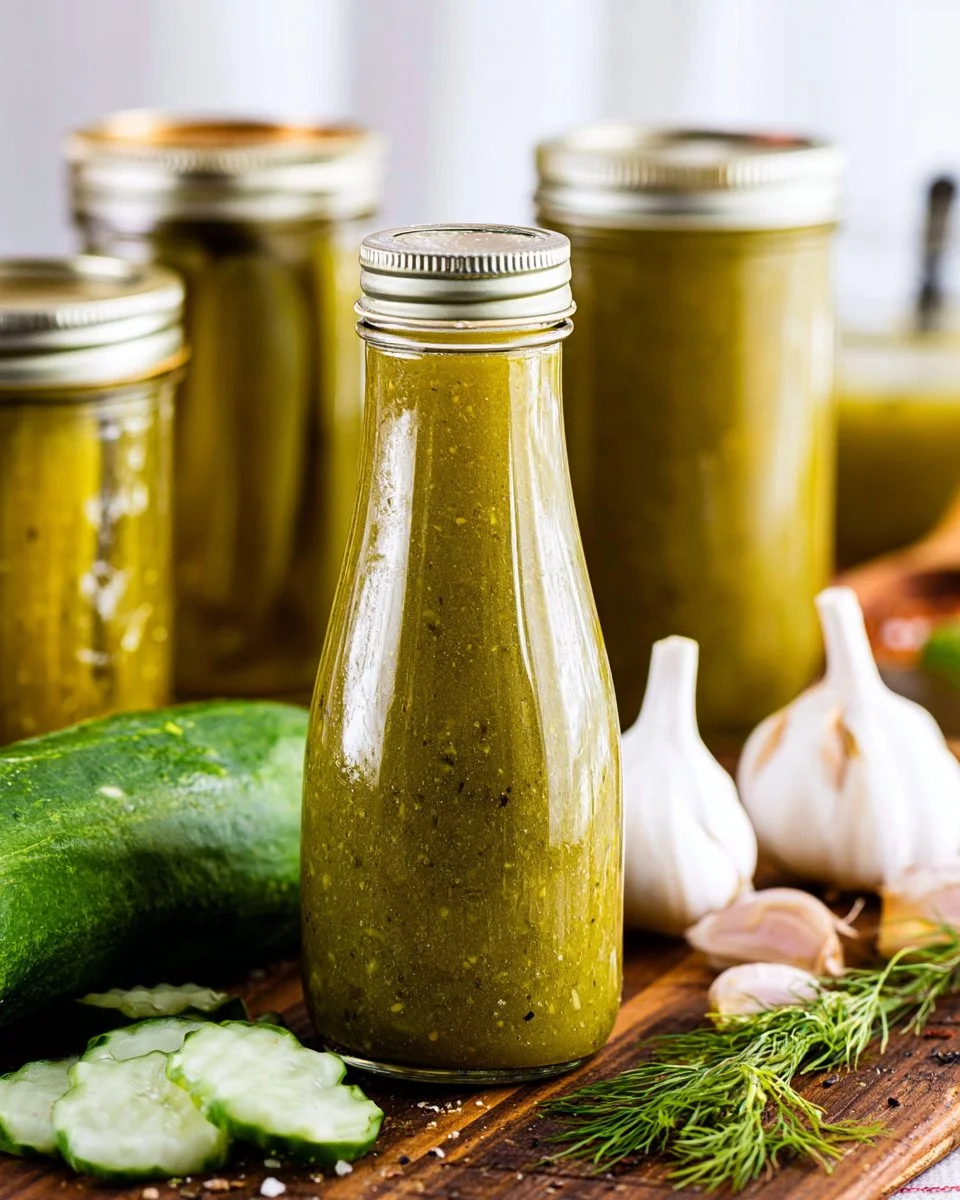
Transform your meals with a bold and zesty addition! This homemade hot sauce combines the vibrant heat of green hot peppers with the tartness of dill pickles, bringing a flavorful punch that’s perfect for spice lovers. Ideal for drizzling over tacos, adding a kick to sandwiches, or using as a marinade, this Dill Pickle Hot Sauce promises to elevate your dishes from ordinary to extraordinary.
The unique blend of flavors melds beautifully, offering a perfect balance of heat and tang, while the fermentation process creates complex layers of flavor that are both addictive and refreshing. Plus, making your own hot sauce allows you to customize the ingredients, ensuring it aligns with your personal taste preferences. The creamy texture of the sauce makes it easy to incorporate into various meals, and you’ll love knowing exactly what goes into your condiments.
Quick Answer
This Dill Pickle Hot Sauce is a spicy, tangy condiment that brings bold flavor to any dish, easily customizable, and can be made at home with simple ingredients!
Why You’ll Love This Recipe
This recipe is a must-try for anyone who enjoys a little heat and a lot of flavor. Here are some reasons to love it:
- Homemade Goodness – Skip the store-bought and create your own version with fresh ingredients.
- Flavor Explosion – The combination of hot peppers and dill pickles delivers a more complex taste profile.
- Customizable – Adjust the heat level and acidity to suit your preference.
- Healthy Option – A great way to add flavor without extra calories.
- Perfect for Meal Prep – Make a batch ahead of time for easy additions to meals throughout the week.
What Makes This Recipe Special
This Dill Pickle Hot Sauce stands out due to its unique fermentation process, which not only enriches the flavor but also provides gut-friendly probiotics. The blend of green hot peppers offers a fruity heat that is complemented by the tangy freshness of dill pickles. The additional ingredients like garlic and onion enhance the depth of flavor, making it versatile for a variety of dishes. Plus, the use of pickle brine captures the essence of traditional pickling methods, allowing you to incorporate those nostalgic flavors into your modern meal prep.
Kitchen Tools You’ll Need
- Fermentation Vessel – Essential for the fermentation process to create the sauce’s unique flavor.
- Sharp Knife – For dicing peppers and slicing onions and garlic efficiently.
- High-Powered Blender or Food Processor – Needed to blend the ingredients into a smooth sauce.
- Fine Mesh Sieve – Optional for achieving an ultra-smooth texture.
- Measuring Tools – To ensure accurate ingredient proportions for the brine and vinegar.
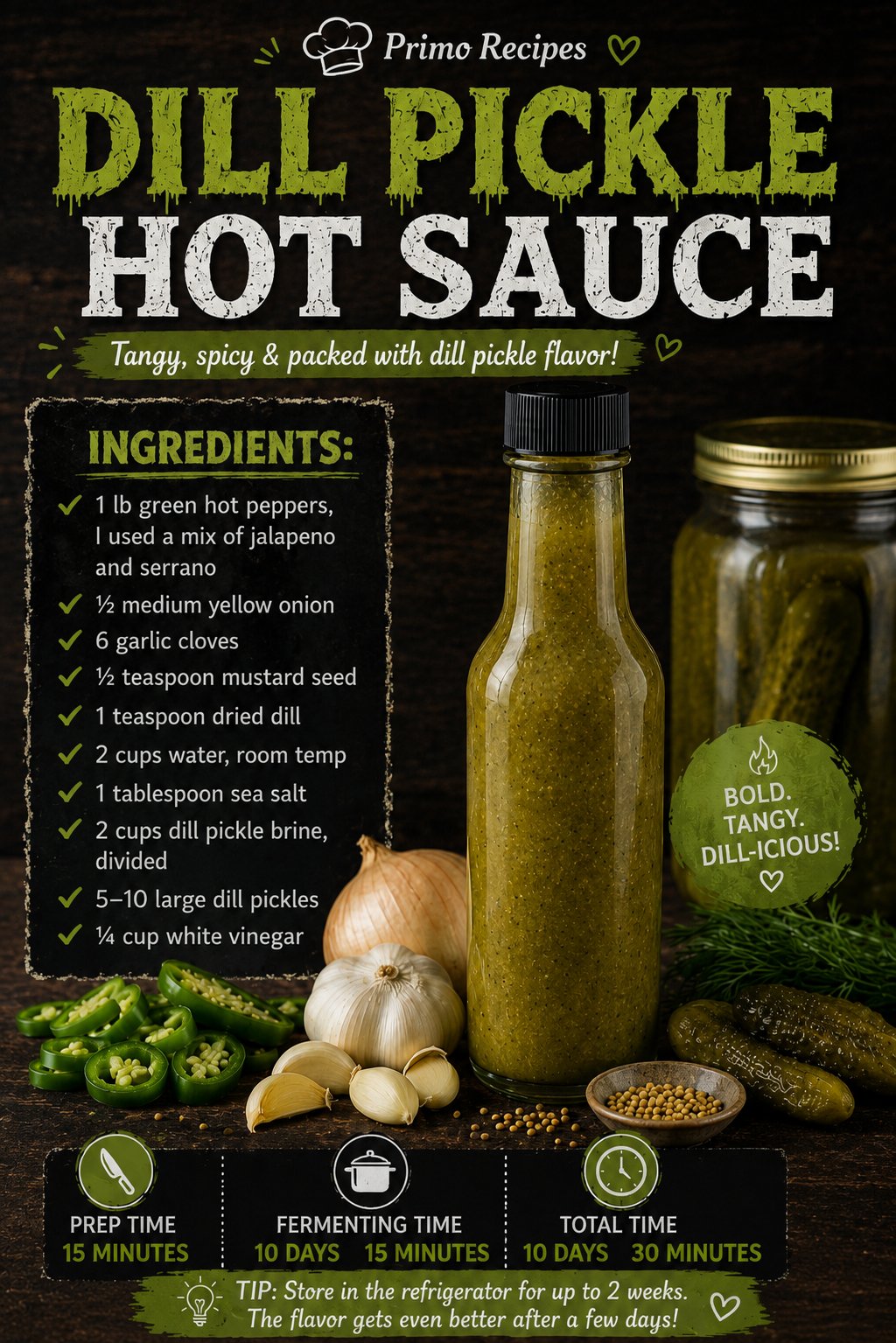
Ingredients
green hot peppers: Provides the primary heat, contributing a bold flavor profile.
yellow onion: Adds sweetness and depth to enhance the overall taste.
garlic cloves: Introduces a savory kick and aromatic notes.
mustard seed: Offers subtle spice and depth to the flavor.
dried dill: Delivers a fresh, herbal note that pairs wonderfully with pickles.
water: Acts as a base for the brine, helping to combine the flavors.
sea salt: Essential for fermentation, enhancing flavor while inhibiting spoilage.
dill pickle brine: Adds a tangy, salty flavor that mirrors classic pickles.
dill pickles: Deepens the dill flavor while providing a tangy essence.
white vinegar: Increases acidity and contributes to the overall tanginess.
xanthan gum: Optional thickening agent for achieving a desired sauce consistency.
Ready to cook? Scroll to the recipe card below for exact measurements.
How to Make Dill Pickle Hot Sauce
Phase 1 – Prep
STEP 1. Wash the Fermentation Vessel. Prepare for fermenting by washing a fermentation vessel with soap and hot running water. Set aside to dry.
STEP 2. Prepare Ingredients. Coarsely dice 1 pound of peppers, 1/2 of a yellow onion, and slice 6 garlic cloves. Add all ingredients to the fermentation vessel, along with 1 teaspoon dried dill and 1/2 teaspoon mustard seed.
STEP 3. Create Salt Brine. Combine 2 cups of room-temperature water with 1 tablespoon of sea salt. Stir until completely dissolved.
Phase 2 – Cook
STEP 4. Cover Ingredients with Brine. Pour salt brine into the fermentation vessel until the contents are just covered. If you don’t have enough brine to cover all ingredients, whip up another batch, 2 cups water to 1 tablespoon salt, and pour until just covered.
STEP 5. Weigh Down Ingredients. Weigh down the ingredients before securing the lid tightly.
STEP 6. Ferment Accordingly. Set it aside to ferment. Keep your ferment somewhere where you’ll see it daily to observe and open the lid and burp it but keep it away from direct sunlight. If you’re using an airlock lid or pickle pipe, burping is unnecessary.
STEP 7. Monitor Fermentation. After a few days, you should start to notice fermenting activity. There will be small bubbles that rush to the top of the jar when you tap it, the jar may hiss slightly when opened, the color of the peppers will dull, the brine will be cloudy, and the brine may leak over the top of the jar and run down the sides. Later on in the process, the fermentation signs will become less obvious, they jar may hiss less or the bubbles may be fewer, but the fermentation process is still moving along!
STEP 8. Ferment for Days. Allow the sauce to ferment for 7-14 days.
Phase 3 – Serve
STEP 9. Strain Fermented Ingredients. Once satisfied with the level of fermentation, strain the contents of the fermentation vessel and reserve the brine.
STEP 10. Blend the Mixture. Blend the fermented vegetables along with 5 large dill pickles, 1/2 cup of the reserved brine, 1/4 cup white vinegar, and 1 – 1 1/2 cups of dill pickle juice in a high-powered blender or food processor until smooth.
STEP 11. Add Optional Thickener. If using xanthan gum, add 1/2 teaspoon of xanthan gum to the hot sauce and blend until completely combined.
STEP 12. Tweak Flavor to Preference. Add more brine to increase the salty flavor, more vinegar to increase acidity, or more pickles to increase the dill pickle flavor, or cut the heat, until you reach your desired flavor, feel free to add water to thin down the sauce if required.
STEP 13. Optionally Sieve. Optionally, you can run the hot sauce through a fine mesh sieve to make it ultra-smooth. It takes a couple of minutes, but it’s worth it.
STEP 14. Store the Hot Sauce. Transfer the finished spicy dill pickle hot sauce to small jars or bottles for storage in the refrigerator.
Why This Recipe Works
This Dill Pickle Hot Sauce achieves a beautiful balance between heat and tang, thanks to the intricate fermentation process that develops complex flavors over time. The combination of green hot peppers delivers vibrant heat, which is beautifully complemented by the salty and tangy notes from the dill pickles and brine. The onions and garlic introduce aromatic flavors that elevate the taste. Each ingredient plays a critical role, ensuring that the final product is not just spicy but also rich and layered in flavor. With the correct blending, the sauce maintains a smooth texture, making it appealing to drizzle over various dishes.
Pro Tips
To achieve the best results with your Dill Pickle Hot Sauce, consider the following tips:
- Choose a balanced mix of peppers to find your perfect heat level. Mixing varieties like jalapenos and serranos can provide depth and complexity.
- Make sure your fermentation vessel is clean to avoid unwanted bacteria that can spoil the batch.
- Check the sauce daily to monitor fermentation. If using a traditional lid, remember to burp it to release gases.
- Don’t hesitate to experiment! Adjust the amount of vinegar or brine based on your taste preference to create the ideal flavor for you.
- For a smoother sauce, use a high-powered blender and ensure all ingredients are fully blended.
Common Mistakes to Avoid
Mistake: Using old or spoiled ingredients.
Why it happens: Ingredients can spoil quickly, affecting the fermentation and flavor of the sauce.
How to fix it: Always use fresh ingredients and store them correctly before starting your recipe.
Mistake: Not monitoring the fermentation process.
Why it happens: Fermentation can vary greatly, and failure to observe can lead to over-fermentation.
How to fix it: Check your sauce daily for bubbling and adjust the fermentation time accordingly.
Mistake: Overloading the fermentation vessel.
Why it happens: Ingredients need space to bubble and ferment properly.
How to fix it: Use a correctly sized vessel to allow for growth and expansion.
Variations
- Add additional spices such as cumin or coriander for extra depth.
- Incorporate fruits like mango or pineapple for a sweet twist.
- Experiment with different types of peppers to find your ideal flavor.
- Use apple cider vinegar for a unique tanginess.
- Replace some brine with fresh squeezed lemon juice for a lighter flavor profile.
Nutrition Highlights
| Nutrient | Role |
|---|---|
| Vitamin C | Supports immune function and skin health. |
| Capsaicin | May boost metabolism and decrease appetite. |
Serving Ideas
This Dill Pickle Hot Sauce can spice up a myriad of dishes! Try it drizzled over soft tacos for an added kick, mixed into potato salad for an exciting twist, or as a marinade for grilled chicken. It’s also fantastic as a dipping sauce for fried snacks or mixed in burgers for a flavorful punch. Its versatility ensures your meals never feel boring!
Best Occasions for This Recipe
This spicy concoction is perfect for summer barbecues, game-day gatherings, or casual family dinners. It pairs exceptionally well with rich comfort foods like burgers and fried chicken, making it an ideal addition to outdoor picnics or potlucks. Any occasion that calls for lively flavors will benefit greatly from this Dill Pickle Hot Sauce!
Meal Prep & Storage
Meal Prep
Preparing your Dill Pickle Hot Sauce in advance makes it a fantastic addition to your weekly meal prep. Once your sauce is made, store it in airtight containers to have on hand throughout the week for quick meals.
Refrigeration
Store your hot sauce in the refrigerator where it can stay fresh for several weeks. Just be sure to keep it in sealed jars or bottles for longevity.
Freezing
For longer storage, you can freeze your hot sauce in ice cube trays or freezer bags, ensuring you have single servings for future use.
Reheating
When ready to use a frozen batch, simply thaw in the refrigerator overnight or run the container under warm water until just loosened.
FAQs
How long will this hot sauce last in the fridge?
The Dill Pickle Hot Sauce can last in the refrigerator for about three months if stored properly in a sealed container.
Can I use different types of peppers?
Absolutely! Feel free to experiment with different spice levels and flavors by using other varieties of hot peppers.
What if my hot sauce is too thick?
If the sauce is too thick, you can thin it down by adding a little bit of water or additional vinegar to achieve your desired consistency.
Can I make this sauce without fermentation?
Yes! You can skip fermentation by simply blending the ingredients together, but the flavor complexity will be different.
Is this hot sauce gluten-free?
Yes, all the ingredients used in this recipe are naturally gluten-free, making it suitable for those with gluten sensitivities.
Save This Recipe for Later
Love this recipe? Make sure to save it for later so you can enjoy this spicy Dill Pickle Hot Sauce whenever you’re in need of a flavor boost!
Conclusion
Crafting your own Dill Pickle Hot Sauce is not only rewarding but also offers limitless possibilities to customize and enhance your meals. With its unique blend of flavors and easy preparation, this spicy condiment will quickly become a staple in your kitchen. Embrace the boldness and share your culinary creation with family and friends—because every meal deserves a little kick!
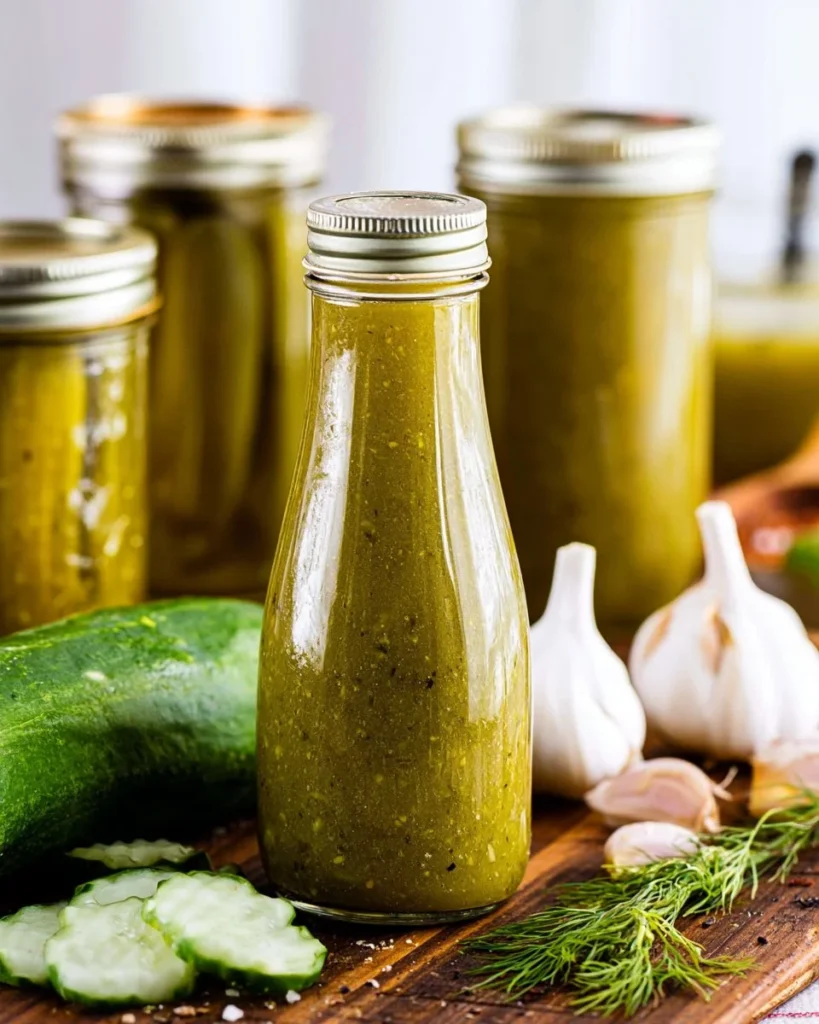
Dill Pickle Hot Sauce
Ingredients
Method
- Wash the Fermentation Vessel and set aside to dry.
- Coarsely dice the green hot peppers, yellow onion, and slice the garlic cloves. Add all ingredients to the fermentation vessel, along with dried dill and mustard seed.
- Combine the water and sea salt to create a salt brine, stirring until dissolved.
- Pour the salt brine into the fermentation vessel until the contents are just covered.
- Weigh down the ingredients and secure the lid tightly.
- Set aside to ferment, keeping an eye on it daily to observe and burp if necessary.
- Allow the sauce to ferment for 7-14 days, monitoring for signs of fermentation.
- Once fermentation is satisfactory, strain the contents and reserve the brine.
- In a blender, combine the fermented vegetables with dill pickles, reserved brine, and white vinegar until smooth.
- If desired, add xanthan gum and blend until fully combined.
- Adjust flavor by adding more brine, vinegar, or pickles as preferred.
- Optionally sieve for an ultra-smooth sauce.
- Transfer to jars or bottles and store in the refrigerator.