
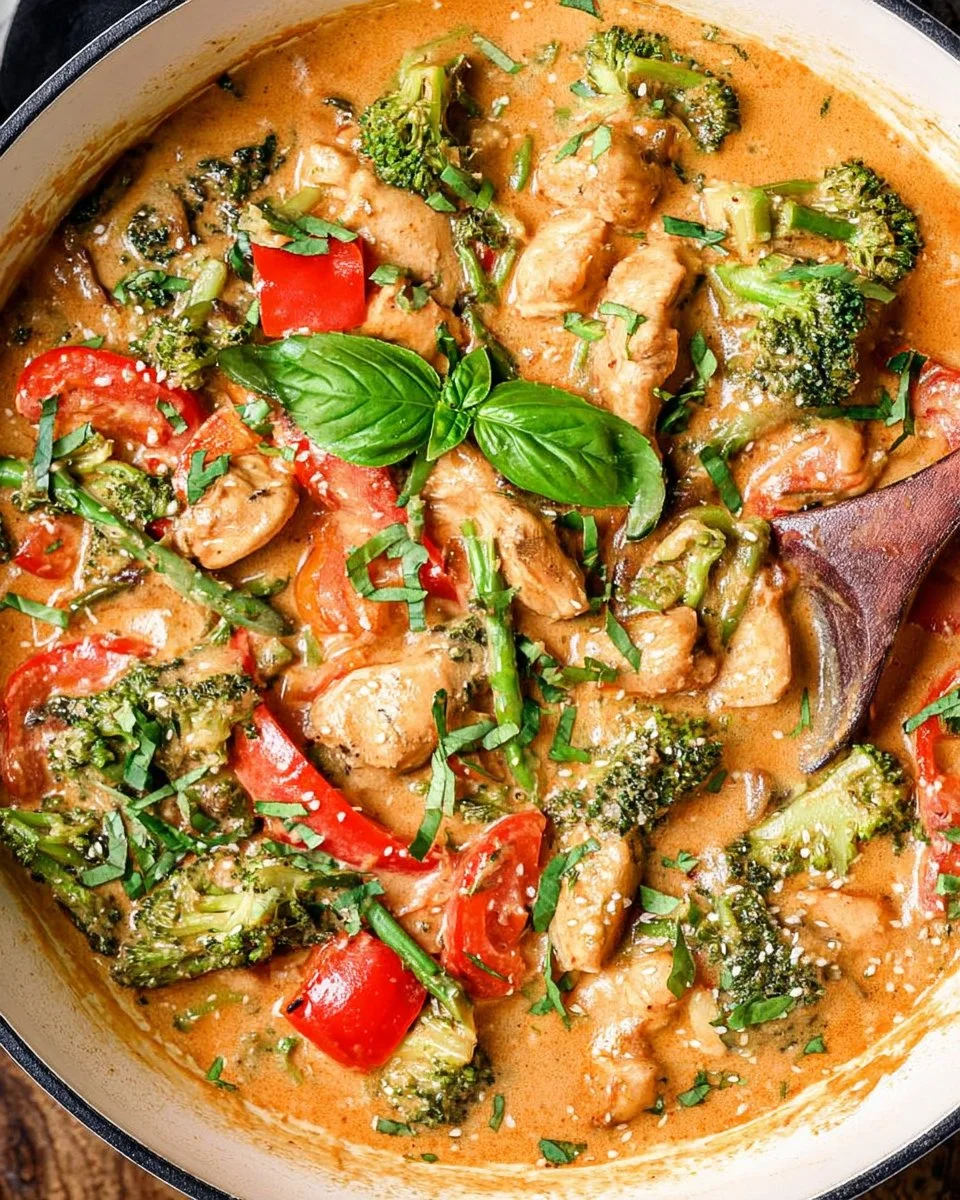
Cooking fatigue is a common dilemma in busy households. As a health-conscious, family-oriented individual, you may find yourself hitting a wall in the kitchen, struggling to keep meal planning exciting while remaining budget-aware. This is where Thai Red Curry Chicken with Vegetables shines as a solution—the high-protein dish packs vibrant flavors and senses, making it a go-to for those striving to stay on track with their nutrition goals. Packed with colorful vegetables, rich coconut milk, and a kick of red curry paste, it checks off boxes for being nutritious, delicious, and easy to make.
Kitchen Frustration That Makes This Recipe a Lifesaver
Imagine coming home after a long day, the thought of preparing dinner looms over you like a dark cloud. You want to provide something delicious for your family but feel stuck in a repetitive cycle of bland meals. That’s when recipes like Thai Red Curry Chicken with Vegetables come to the rescue! It effortlessly combines convenience with mouthwatering flavors, allowing you to tick off your meal plan goals. By incorporating fresh vegetables such as broccoli and carrots into this dish, you can make every mealtime a mini celebration.
To ease your cooking troubles, this recipe serves as an adaptable and forgiving framework. You can make it your own by substituting ingredients based on what’s in your refrigerator, thus reducing waste while feeding a crowd. Whether it’s a busy weeknight or a gathering with friends, this dish ensures you shine in the kitchen without burning out.
Why This Thai Red Curry Chicken with Vegetables Works So Well
Quick Answer: Thai Red Curry Chicken with Vegetables offers a delightful combination of protein, flavor-packed spices, and colorful veggies, creating a macro-balanced meal that is both tasty and easy to prepare.
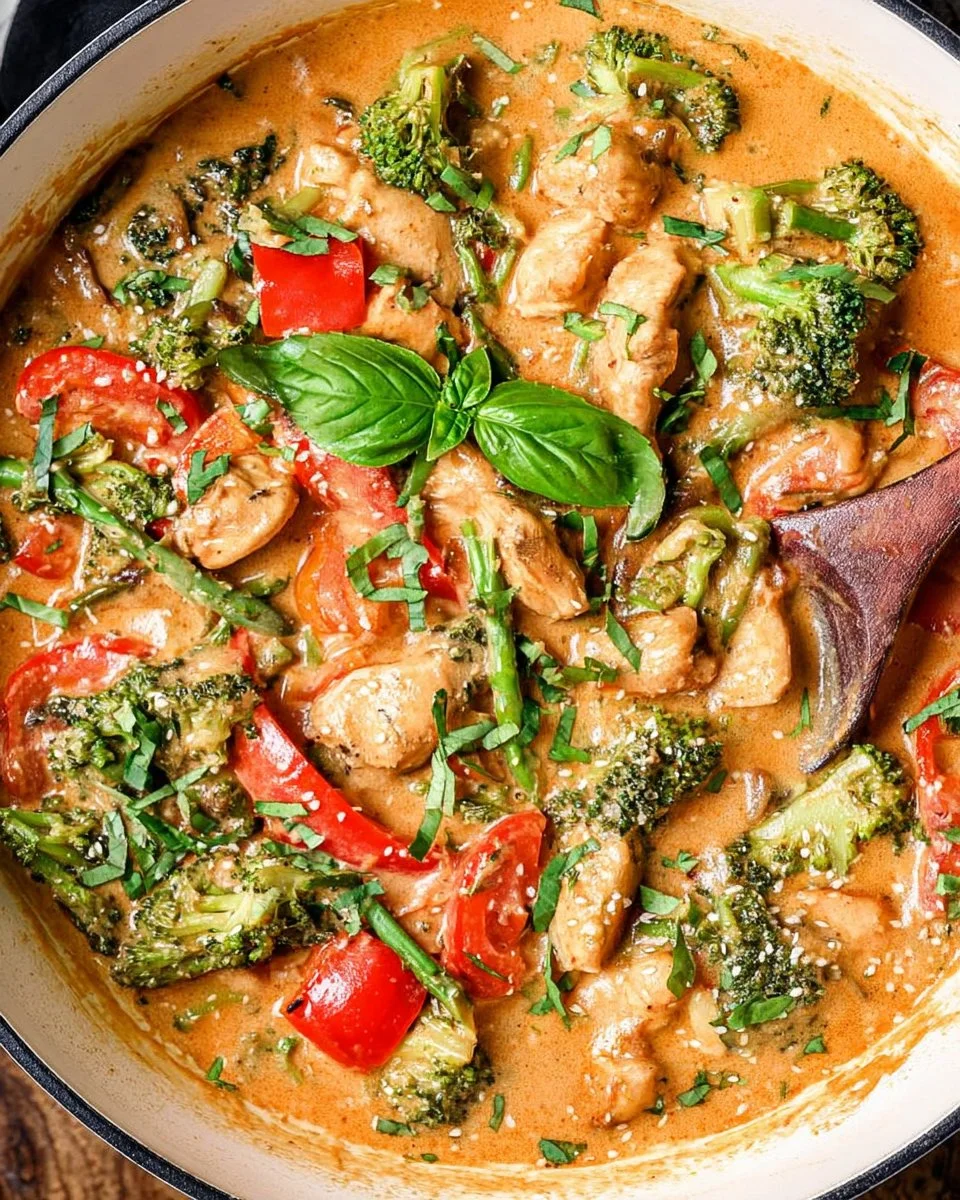
This Thai Red Curry Chicken with Vegetables serves up a satisfying experience with every bite. The contrast of the savory coconut milk against the freshness of vegetables creates a perfect harmony, while the lean protein sources—chicken thighs or breasts—help you hit your nutrition goals. It’s also a time-saving recipe that can be cooked in just a few steps without compromising on taste, allowing you to present a dish that feels restaurant-worthy at home.
Ingredients, Substitutions & Foolproof Tips
- 1 1/2 tablespoons light olive oil or coconut oil – For sautéing; each oil adds a unique flavor.
- 1 pound chicken thighs or breasts, thinly sliced – Choose thighs for extra juiciness, breasts for leaner meat.
- 1/2 large yellow onion, chopped – Sweetness complements the spice.
- 2 tablespoons red curry paste – The heart of flavor; adjust per spice tolerance.
- 1 red bell pepper, chopped – Adds a pop of color and sweetness.
- 1 carrot, thinly sliced – For crunch and a hint of earthiness.
- 1 1/2 cups broccoli florets – For added nutrients; you can substitute with any seasonal vegetable.
- 2 teaspoons freshly grated ginger – Enhances flavor while offering health benefits.
- 4 garlic cloves, minced – Essential for aromatic depth.
- 1 (13.5 oz.) can coconut milk – A creamy base; ensures rich flavors.
- 1 tablespoon cornstarch – For thickening the sauce.
- 1 tablespoon Asian/Thai sweet chili sauce – Brings a sweet and spicy kick.
- 2 tablespoons less sodium soy sauce – For umami flavor; lower sodium version keeps it healthier.
- 2 tablespoons fish sauce – Traditional Thai flavor enhancer; optional if vegetarian.
- 2 tablespoons lime juice – Balances flavors with acidity.
- 1 tablespoon brown sugar – Counteracts spices and brightens the dish.
- 1 bay leaf – Adds nuanced, herbal notes.
- 1 teaspoon dried basil – For a fragrant finish.
- 1/4 teaspoon salt – Enhances all flavors.
- 1/4 teaspoon pepper – For added zest.
- Sriracha to taste (optional) – Optional for those who like heat.
Step-by-Step Directions
- Heat the oil: Heat the oil over medium-high heat in a large nonstick skillet until shimmering, which takes about 1-2 minutes. This ensures your ingredients won’t stick and will have a beautiful sear.
- Cook the chicken and onions: Add the thinly sliced chicken, chopped onion, and red curry paste to the skillet. Stir continuously until the chicken is mostly opaque, usually around 5-7 minutes. This step builds the foundational flavors for your curry.
- Add vegetables: Toss in the broccoli and stir-fry for one minute. Then, quickly add the bell peppers, carrots, grated ginger, and minced garlic. Sauté for another minute until fragrant—this brings out the vibrant aromas.
- Incorporate coconut milk: Pour in half of the coconut milk and stir to combine. For the remaining milk, mix it with cornstarch in a small bowl, then add this mixture along with all other ingredients except garnishes. Stir well.
- Simmer: Bring this mixture to a boil over high heat, then reduce it to a simmer. Cook for about 5 minutes until the sauce thickens and vegetables are crisp-tender. Be sure to discard the bay leaf before serving!
Common Mistakes to Avoid & Pro Tips
- Mistake: Overcooking the chicken.
- Fix: Cook just until it turns opaque; it will finish cooking during the simmer phase.
- Mistake: Not adjusting flavors.
- Fix: Always taste and adjust with more lime juice, soy sauce, or chili sauce according to preference.
- Mistake: Using too much cornstarch.
- Fix: Stick to the recommended amount for a perfectly thick sauce.
Pro Tips
- For an extra protein boost, consider adding chickpeas or tofu.
- If gluten-free, swap soy sauce for tamari.
- Fresh herbs like cilantro or basil can elevate your dish.
Serving, Storage & Freezer Guide
How to Serve Thai Red Curry Chicken with Vegetables
This dish shines when served with a fluffy bed of jasmine rice or steamed quinoa. You can also pair it with rice noodles or cauliflower rice for a lower-carb option. Dress it up with freshly chopped herbs and a squeeze of lime for added brightness.
How to Store Thai Red Curry Chicken with Vegetables
Store any leftovers in an airtight container in the refrigerator for up to 4 days. Reheat gently on the stovetop, adding a splash of water or coconut milk to loosen the sauce if needed.
Can You Freeze Thai Red Curry Chicken with Vegetables?
Yes! This dish freezes beautifully. Let it cool completely before transferring into freezer-safe containers. It can be stored for up to 3 months. When ready to enjoy, thaw in the refrigerator overnight and reheat as previously mentioned.
Frequently Asked Questions
Can I make this recipe vegetarian?
Absolutely! Just substitute the chicken with your favorite plant-based protein like tofu or tempeh, and omit the fish sauce.
How spicy is Thai Red Curry Chicken?
The spice level primarily depends on the amount of red curry paste and Sriracha used. This recipe offers a mild to medium heat, easily adjustable to your liking.
What if I’m allergic to coconuts?
In that case, try using oat or almond milk as an alternative, although the flavor profile will change slightly.
Can I add different vegetables?
Yes! Feel free to experiment with any veggies you have on hand. Snow peas, zucchini, or bok choy are excellent choices too.
Conclusion
Thai Red Curry Chicken with Vegetables is not just a dish; it’s a solution that brings joy and nourishment to your dinner table. Whether you’re battling cooking fatigue or simply looking to provide a delightful meal for your family, this recipe meets your needs. If this recipe reminds you of someone you love, share it with them. Your memories keep recipes alive.
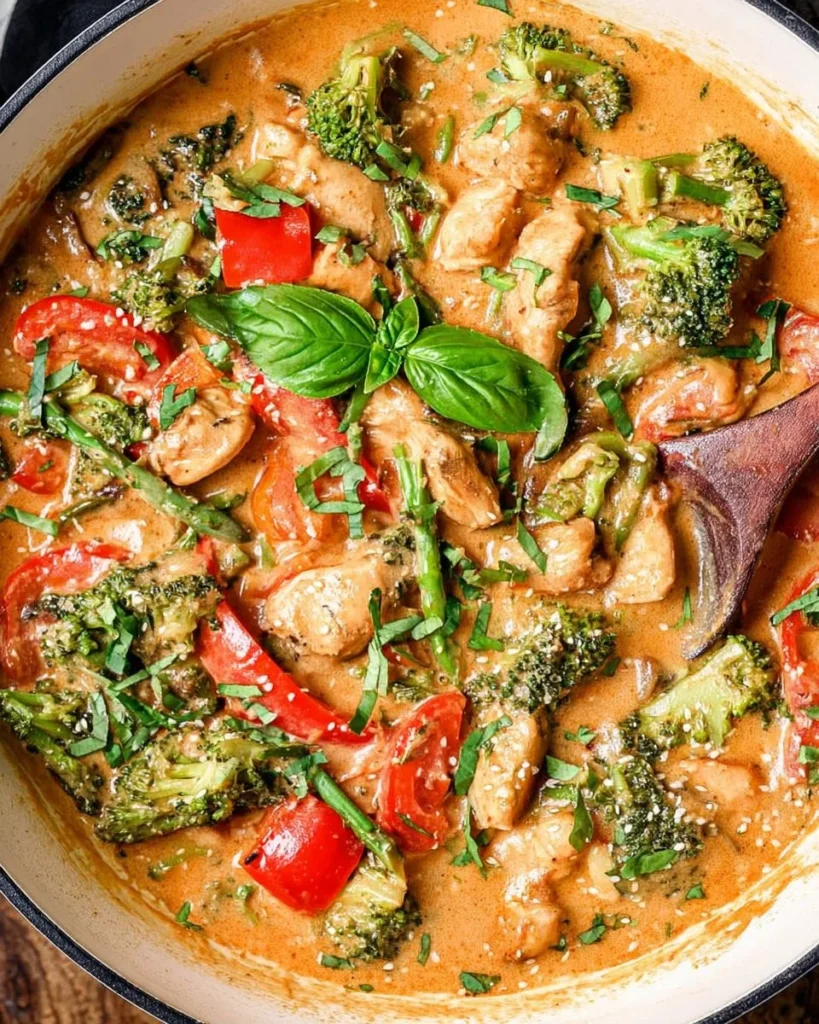
Thai Red Curry Chicken with Vegetables
Ingredients
Method
- Heat the oil over medium-high heat in a large nonstick skillet until shimmering, about 1-2 minutes.
- Add the thinly sliced chicken, chopped onion, and red curry paste to the skillet. Stir continuously until the chicken is mostly opaque, usually around 5-7 minutes.
- Toss in the broccoli and stir-fry for one minute. Then, quickly add the bell peppers, carrots, grated ginger, and minced garlic. Sauté for another minute until fragrant.
- Pour in half of the coconut milk and stir to combine. For the remaining milk, mix it with cornstarch in a small bowl, then add this mixture along with all other ingredients except garnishes.
- Bring this mixture to a boil over high heat, then reduce it to a simmer. Cook for about 5 minutes until the sauce thickens and vegetables are crisp-tender. Discard the bay leaf before serving.