
Have you ever found yourself craving those luscious, savory Hibachi Noodles you loved at a local Japanese steakhouse? Often, we leave those meals wishing we could bring a piece of that culinary magic home. The good news: you absolutely can! With our Hibachi Noodles (Japanese Steakhouse Noodles) recipe, you can enjoy that rich flavor and satisfying texture right in your kitchen. Let’s dive into the story behind this dish and how to transform simple ingredients into a meal that warms hearts and pleases palates.
Cooking Frustration Meets Culinary Delight
Let’s face it: cooking can be frustrating. I remember trying to replicate my favorite Hibachi experience after a delightful night out. I went through the motions, and the result? A clumpy noodle disaster that left me feeling more defeated than satisfied. Sound familiar? We’ve all had those moments in the kitchen. That’s why I’m passionate about sharing my cooking experiences, so you don’t have to feel the same frustration I did.
From the time I struggled with stickiness to when I unlocked the secret to perfect noodles, my journey has been filled with lessons that elevate not just the dish but the experience itself. Rediscovering joy in the kitchen stems from simple recipes. Yet, the subtle nuances can make or break them. Hibachi Noodles (Japanese Steakhouse Noodles) are a testament to that journey. These noodles, with their soft and supple texture, can bring a little slice of Japan to your dinner table.
Whenever I make these, I often recall the laughter and chatter from that vibrant restaurant, the sizzling sounds on the grill, and the joy of sharing delicious food with loved ones. It’s those warm, nostalgic moments that remind me cooking goes beyond food; it’s about connection. When you make these noodles, you enrich the simple act of eating with love, laughter, and memories.
Discover more about bringing joy to your family meals with our Peanut Butter Chicken Recipe: The Ultimate Comfort Food Dish.
Why Hibachi Noodles Work Wonders
Hibachi Noodles (Japanese Steakhouse Noodles) charm your taste buds with robust flavors and satisfy with texture that makes you crave more. What’s the secret that makes them work so well? It’s all in the balance of a few carefully selected ingredients and their harmonious interaction.
The blend of vegan butter, fresh garlic, and the umami-rich teriyaki sauce creates a splendid base that envelops the noodles, infusing them with flavors that transport you straight to a bustling restaurant kitchen. The light sweetness from brown sugar perfectly complements the savory notes, while a drizzle of sesame oil elevates the dish even further.
Imagine finishing off this dish with the refreshing zing of lemon or a sprinkle of toasted sesame seeds — it’s a dance of flavors that tantalizes your senses!
Quick Answer: The secret to perfect Hibachi Noodles (Japanese Steakhouse Noodles) is the balance of fresh garlic and umami-rich sauces.
Couple these flavors with the satisfaction of cooking at home, and you’ve unlocked a world of culinary possibilities! For an energizing twist, consider pairing these noodles with a refreshing side like our Gluten and Dairy-Free Breakfast Ideas: Start Your Day Right. You’ll create a wholesome meal that delights everyone at the table.
Ingredients, Substitutions & Foolproof Steps
Ingredients List:
- 1 lb of spaghetti or any noodles – Choose your favorite type! Spaghetti, linguini, udon, or ramen all work wonderfully.
- 2 and 1/2 tablespoons vegan butter – This adds richness to your sauce; feel free to replace it with regular butter if you prefer.
- 2 and 1/2 tablespoons fresh garlic, finely chopped – Fresh garlic packs a flavor punch; jarred options can work in a pinch.
- 3 to 4 tablespoons teriyaki sauce – An essential ingredient for sweetness and depth; make sure to check for gluten-free options if needed!
- 2 tablespoons Tamari (sodium reduced recommended) – For a gluten-free option; soy sauce can serve as a substitute.
- 1 tablespoon dark soy sauce – This adds a deeper flavor profile; regular soy can substitute if that’s all you have.
- 1 and 1/2 tablespoons mirin – It’s sweet and tangy; in a pinch, use a bit of sugar and vinegar mix.
- 3 tablespoons brown sugar – This balances out saltiness; coconut sugar can be a healthier alternative.
- 1/2 teaspoon ground ginger – For that touch of warmth; fresh ginger works even better!
- Toasted sesame seeds – These add crunch and flavor. Nuts are a nice alternative.
- Drizzle of toasted sesame oil – For an aromatic finish; omit if you prefer a lighter taste.
- Diced green onions – Freshness enhances the dish, but you can skip this if they’re not on hand.
- Squeeze of lemon – Adds brightness to the dish; lime would work as well.
- Pinch of salt and white or black pepper – To taste, but remember not to overdo it with the salt given the sauces.
Noodles: Cook pasta according to directions in a large pot. Add a drizzle of oil and a good pinch of salt to boiling cooking water. Cook noodles in plenty of water to avoid gummy starchy noodles. Drain and add back to the pot off the heat, or a serving bowl; set aside.
Sauce: While noodles are cooking, add butter and garlic to a small microwave-safe bowl. Cook for 1 minute or so. Then stir in the rest of the sauce ingredients. The sauce is made!
Assemble: Pour sauce over hot cooked noodles and toss to combine. Enjoy immediately with any optional toppings mentioned above. (I personally prefer mine straight up and without sesame oil, but that’s just me.)
Common Mistakes to Avoid:
- Not using enough water to cook the noodles can lead to clinginess.
- Adding sauce to cold or lukewarm noodles can prevent flavor absorption.
- Forgetting to taste as you go can leave the dish flat.
Pro Tips:
- Always have all ingredients ready before starting your cooking for a seamless experience.
- Adjust the sweetness and saltiness according to your personal taste.
- Pair with grilled veggies or chicken for a hearty meal.
Nutrition Highlights:
NutrientPer Serving Protein7g Carbs12g Fat6g Discover more about balancing flavors and portions with our Sweet and Sour Mix: Ultimate Guide to Cocktails.
Serving, Storage & Freezer Tips
How to Serve Hibachi Noodles (Japanese Steakhouse Noodles)
These noodles shine brightest when served immediately. Garnish with toasted sesame seeds, diced green onions, and a fresh lemon wedge. Pair them with a protein of your choice for a complete meal that pleases even the pickiest diners.
How to Store Hibachi Noodles (Japanese Steakhouse Noodles)
Leftovers can easily be refrigerated in an airtight container for up to three days. Reheat gently on the stovetop with a splash of water to restore texture.
Can You Freeze Hibachi Noodles (Japanese Steakhouse Noodles)?
While noodles can technically be frozen, their texture may change upon thawing and reheating. For best results, enjoy them fresh or store the sauce separately if you plan to freeze.
Cooking from the heart means making adjustments, so feel free to embrace your own creativity! Your kitchen should feel like an extension of who you are; be bold and daring to try new things.
FAQ SECTION
- Can I use different types of noodles for Hibachi Noodles?
- Yes, you can use any noodles you prefer! Spaghetti, ramen, udon, or even gluten-free options all work beautifully.
- How spicy are Hibachi Noodles?
- This dish is not naturally spicy, but you can add chili flakes or sriracha if you like a kick.
- What vegetables can I add to Hibachi Noodles?
- You can toss in bell peppers, broccoli, or snap peas for a nutritious crunch.
- Can I make Hibachi Noodles ahead of time?
- Yes, you can prepare the sauce ahead and store it separately, then combine with cooked noodles just before serving.
CONCLUSION
Cooking allows us to recreate memories and share experiences with loved ones. When you prepare Hibachi Noodles (Japanese Steakhouse Noodles) at home, consider the warmth it can bring into your life and those you care about. If this recipe reminds you of someone you love, share it with them. Your memories keep recipes alive!
Enjoy every bite, and happy cooking!
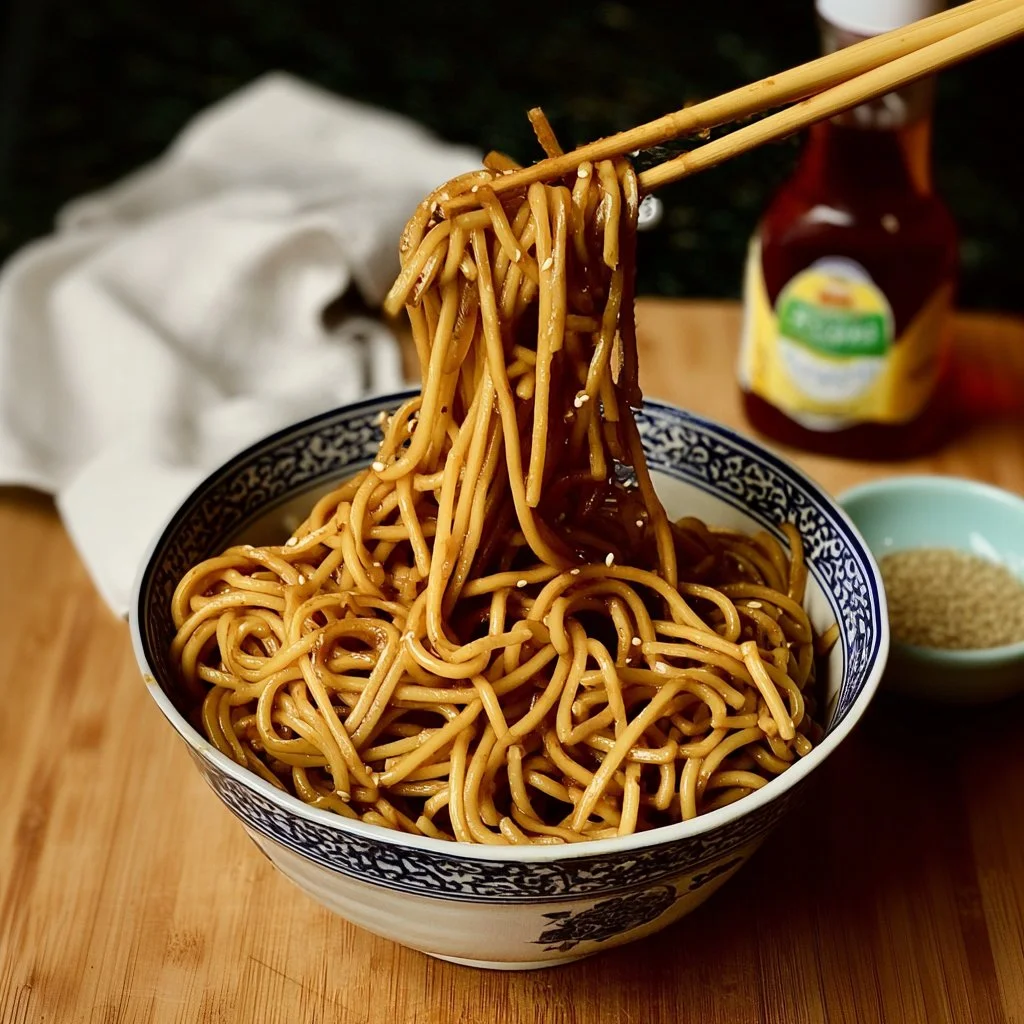
Hibachi Noodles (Japanese Steakhouse Noodles)
Ingredients
Method
- Cook pasta according to directions in a large pot, adding a drizzle of oil and a pinch of salt to boiling water.
- Cook noodles in plenty of water to avoid gummy starchy noodles, then drain and set aside.
- In a small microwave-safe bowl, combine the vegan butter and chopped garlic. Microwave for about 1 minute.
- Stir in the rest of the sauce ingredients until well combined.
- Pour the prepared sauce over the hot cooked noodles and toss to combine.
- Serve immediately, garnished with optional toppings.