
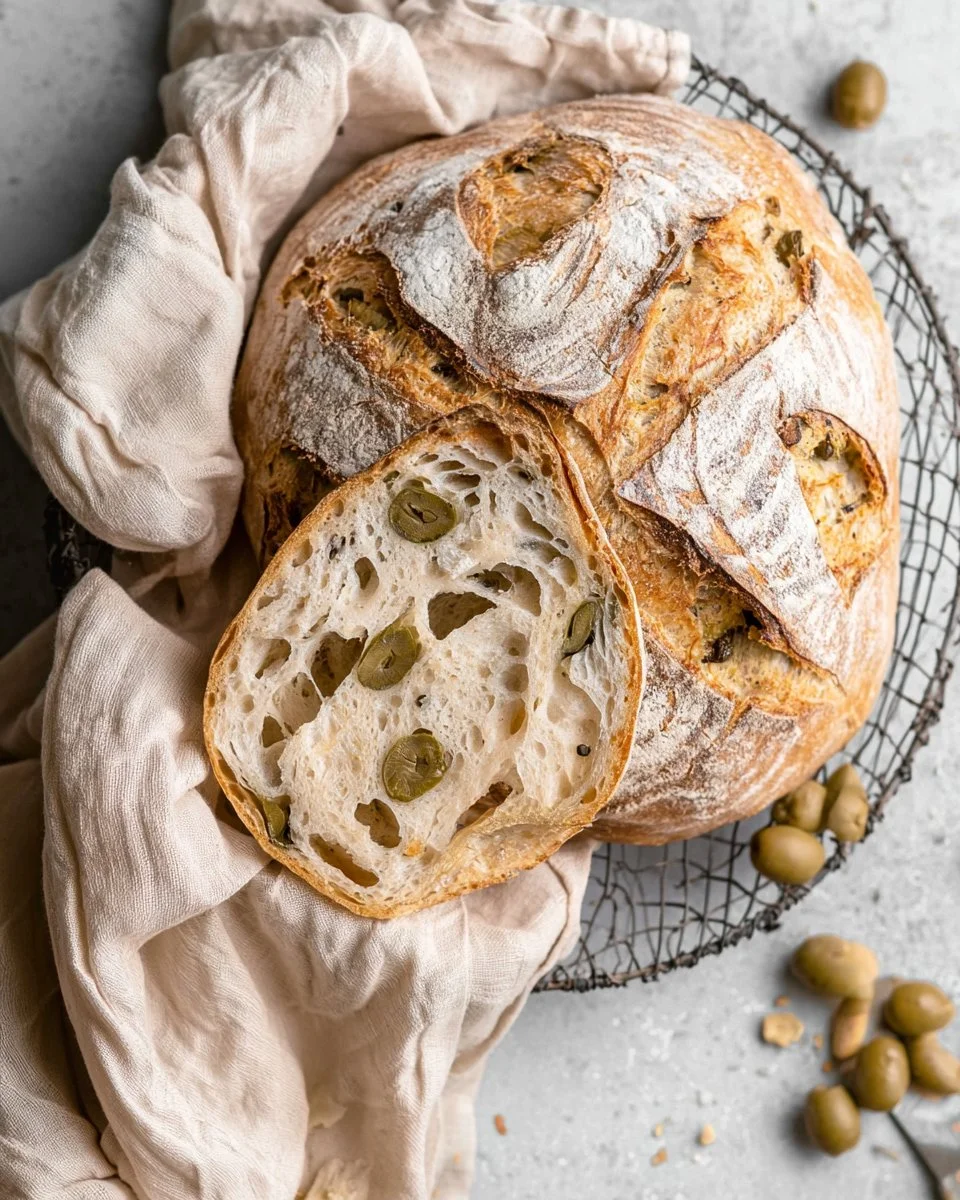
Imagine the warm, comforting aroma of freshly baked bread wafting through your kitchen, tempting you to indulge in a delightful slice. This inviting experience is just a simple no-knead olive bread away! With its beautifully crispy crust and soft, flavorful interior, it’s a go-to recipe that will become a staple in your culinary repertoire. The rich flavors of pimento olives beautifully intertwine to create a bread that’s excellent for sandwiches, or simply enjoyed alongside your favorite olive oil or cheese.
What makes this recipe even better is its simplicity—there’s no need for any complicated techniques or special equipment. Just mix your ingredients, let the mixture rise, and bake it in a Dutch oven for beautifully baked perfection. Whether you’re a bread-making novice or a seasoned pro, this easy-to-follow method ensures you’ll be slicing into a delicious loaf, ready to impress your family or guests. So grab your ingredients, and let’s get started on this homemade endeavor that will fill your home with warmth and wafting aromas!
Why You’ll Love This Recipe
One of the biggest advantages of this no-knead olive bread recipe is its ease of preparation. It requires minimal effort, making it perfect for busy individuals or families looking for quick dinner ideas. Just a few straightforward steps allow you to create a beautiful loaf that would usually take hours and lots of elbow grease.
The flavor burst from the olives provides a delightful twist that keeps every bite interesting. You can enjoy it fresh out of the oven or use it as the foundation for sandwiches or crostinis. This bread also makes a wonderful accompaniment to soups and salads, really enhancing your meal’s overall appeal. The bread’s chewy interior and crispy crust deliver the perfect texture contrast that makes each slice irresistible. You won’t just love making this bread; you’ll find it hard to keep your family from coming back for second helpings!
What Makes This Recipe Special
This no-knead olive bread recipe stands out for its straightforward approach potential for customization. The use of warm water and a simple mix of dry ingredients results in dough that requires minimal attention while still producing exceptional outcomes. The rise time allows the yeast to work its magic, developing flavor without requiring you to spend hours kneading.
Incorporating pimento olives not only introduces a subtle tang to the bread but also contributes richness and depth that elevate a simple loaf to gourmet status. Unlike many traditional bread recipes, this one embraces the community kitchen spirit by inviting everyone to participate and enjoy what’s happening. This hands-off approach, combined with the mouthwatering result, encourages you to embrace the joy of baking while simultaneously creating delicious comfort food recipes that bring loved ones together around the table.
Ingredients
all-purpose flour: The foundation of the bread that provides structure and chewiness.
instant yeast: Helps the dough rise quickly and efficiently for a light texture.
sea salt: Enhances flavor and strengthens the gluten structure.
warm water: Activates the yeast, ensuring a successful rise in the dough.
maple syrup: Adds a touch of sweetness to balance the savory flavors of the olives.
olive oil: Provides moisture and enriches the bread’s flavor.
pimento olives: Infuses the bread with delightful, briny richness.
How to Make Olive Bread – No Knead Recipe
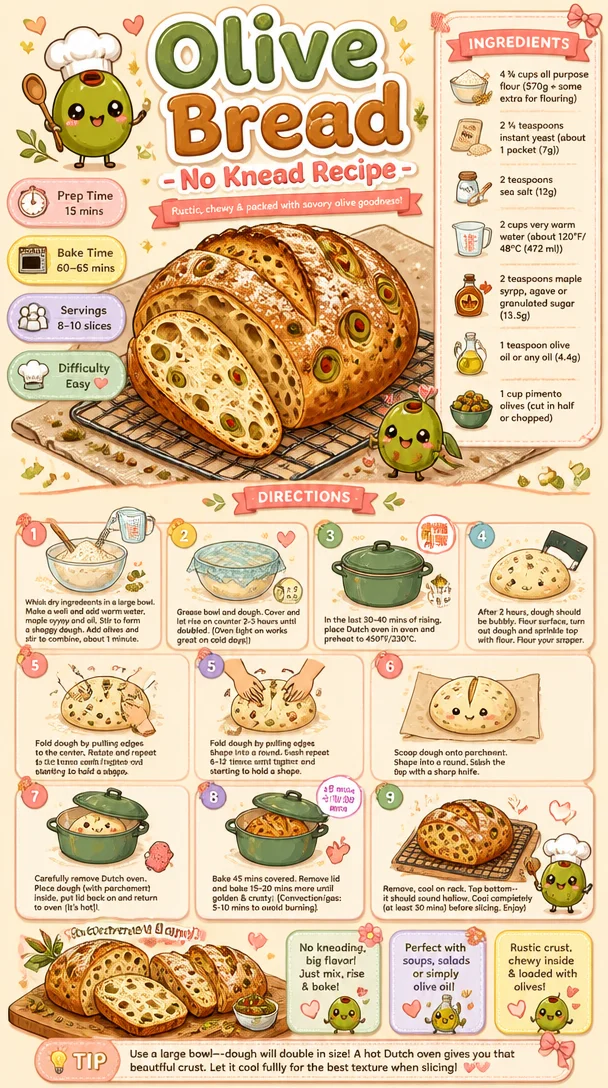
STEP 1. Whisk dry ingredients. In a very large bowl, whisk the flour, yeast, and sea salt together until thoroughly combined.
STEP 2. Create a well. Make a well in the center of the dry ingredients and add the warm water, maple syrup, and oil.
STEP 3. Stir to form the dough. Stir the warm water into the dry mixture until it forms a shaggy dough.
STEP 4. Incorporate the olives. Add the cut olives into the dough and stir to blend them evenly throughout.
STEP 5. Grease the bowl. Lightly grease the sides of the bowl, then turn the dough over in it to coat.
STEP 6. Cover and rise. Cover with greased plastic wrap or a light kitchen towel and let it rise on your counter for 2 to 3 hours.
STEP 7. Prepare warm environment. If your kitchen is cold, place the bowl in an off oven with the light on for a warm, draft-free area.
STEP 8. Preheat the oven. In the last 30-40 minutes of rising, place your Dutch oven in the oven and preheat to 450°F/230°C.
STEP 9. Flour the surface. After about 2 hours, sprinkle at least a tablespoon of flour on a surface and pour the risen dough onto it.
STEP 10. Fold the dough. Sprinkle flour on top and use a dough scraper to fold the dough on itself several times until it feels tighter.
STEP 11. Shape the dough. Scoop the dough and shape it into a circle on a piece of parchment paper, optionally slitting the top for design.
STEP 12. Transfer to Dutch oven. Carefully remove the hot Dutch oven, place the dough (on the parchment) inside, and cover with the lid.
STEP 13. Bake covered. Bake for 45 minutes with the lid on.
STEP 14. Bake uncovered. Remove the lid and bake for an additional 15 to 20 minutes until the crust is golden brown.
STEP 15. Cool the bread. Carefully lift the loaf using the parchment and transfer it to a wire cooling rack.
STEP 16. Test doneness. Turn the bread over and tap the bottom; it should sound hollow to indicate doneness.
STEP 17. Slice and serve. Allow the bread to cool completely before slicing. If you can’t resist, let it cool for at least 30 minutes!
Pro Tips
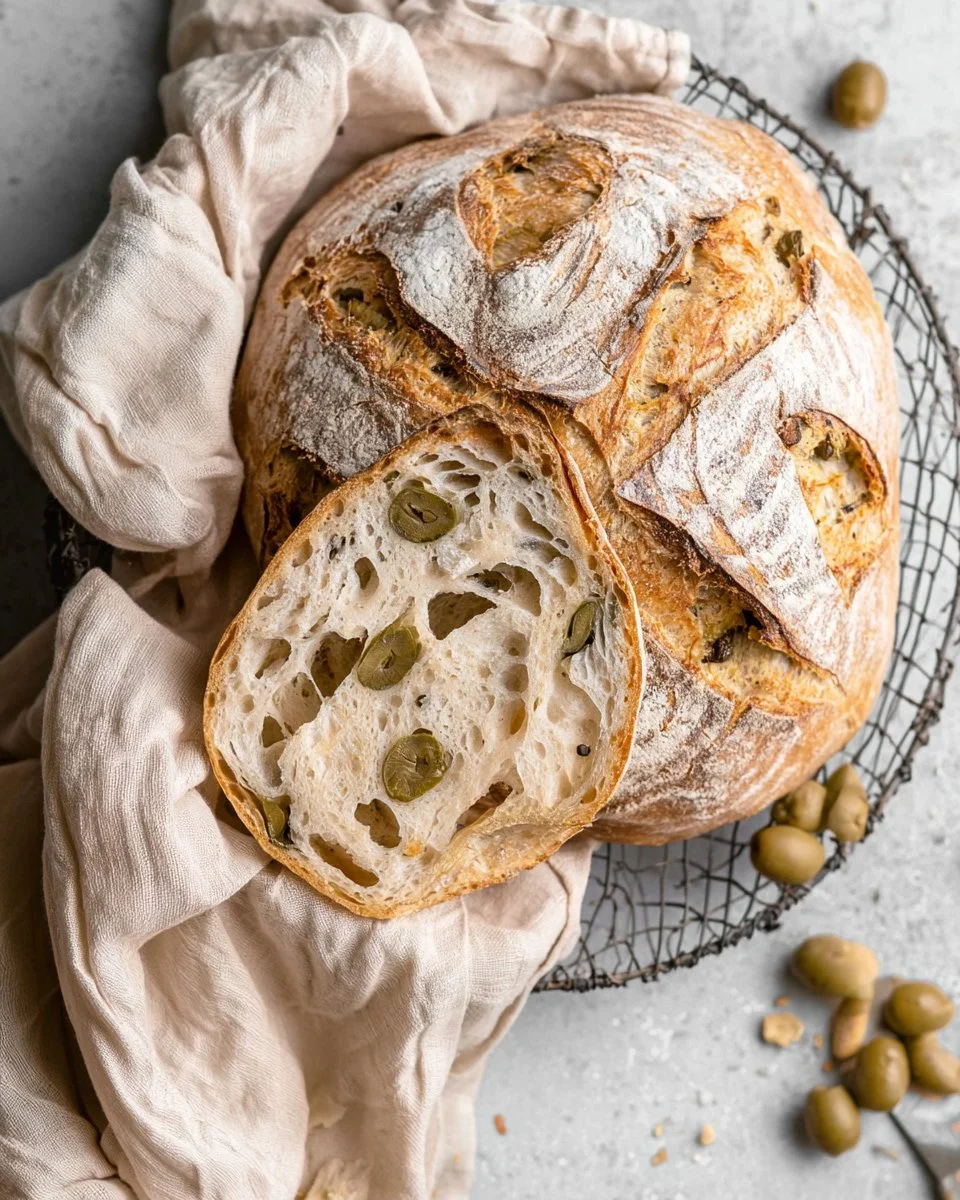
For the best results, use high-quality olive oil and fresh ingredients. The rising time is crucial, so ensure you give the dough adequate time to double in size; this will enhance both the flavor and texture. Additionally, remember the importance of flouring your work surface and the dough itself to prevent sticking during shaping. A properly preheated Dutch oven is vital for achieving that desired crispy crust. If you’re unsure about the doneness of your bread, using a digital thermometer can help; the internal temperature should reach around 200°F/93°C. Lastly, feel free to experiment with the types of olives or mix in other ingredients like herbs or sun-dried tomatoes for more flavor.
Common Mistakes to Avoid
One common mistake is using cold water instead of warm, which can hinder yeast activation and prevent the dough from rising properly. Ensure your bowl is large enough to accommodate the rise; a bowl that’s too small could overflow. Underproofing or overproofing can lead to issues in texture, so keep an eye on the dough as it rises. If you find your dough is too wet, make sure to use adequate flour on your working surface and on your hands to facilitate handling. When baking, remember that different ovens may have varying temperatures, so monitor the bread closely during the final stages to achieve the perfect crust color.
Variations
• Use green olives for a different flavor profile.
• Add herbs like rosemary or thyme for an aromatic touch.
• Incorporate sun-dried tomatoes for extra richness.
• Substitute garlic oil for olive oil for a robust flavor.
• Experiment with different cheeses mixed in for an Italian twist.
Serving Ideas
Enjoy this fragrant olive bread warm, straight from the oven, paired with homemade pesto or high-quality olive oil for dipping. Slice it thin to create delicious sandwiches filled with fresh ingredients, such as mozzarella, tomatoes, and basil for a classic Caprese style. Use hearty pieces to mop up hearty soups or stews, making them even more comforting. This bread also shines at gatherings as part of a charcuterie board featuring cheeses, nuts, and various spreads. The options are endless!
Meal Prep & Storage
Once cooled, store any leftover olive bread in an airtight container at room temperature for up to 3 days for optimal freshness. If you wish to prolong its shelf life, consider freezing the bread; simply slice it first, then wrap it tightly in plastic wrap and place it in a freezer bag. It can be frozen for about three months. When ready to enjoy, simply thaw it at room temperature or pop it into the oven for a few minutes to regain its crustiness. This makes it a fantastic candidate for meal prep and quick family meals!
FAQs
Can I use bread flour instead of all-purpose flour?
Yes, bread flour can be used for a chewier texture due to its higher protein content.
What if I don’t have instant yeast?
You can substitute it with active dry yeast, but allow a longer activation time after dissolving it in warm water.
How can I tell if my dough is rising properly?
Look for the dough to double in size and develop bubbles on the surface, indicating that fermentation is taking place.
Can I make this recipe without olives?
Absolutely! Feel free to leave the olives out or substitute them with other mix-ins like nuts or dried fruits.
What should I serve with my olive bread?
It pairs wonderfully with soups, salads, or as part of a charcuterie platter with meats and cheese.
Conclusion
Baking your own bread has never been so straightforward with this no-knead olive bread recipe. The robust flavors and comforting scent will not only enhance your meals but also impress anyone fortunate enough to share a slice with you. Dive into this rewarding experience of homemade bread, and you’re likely to find yourself craving it again and again!
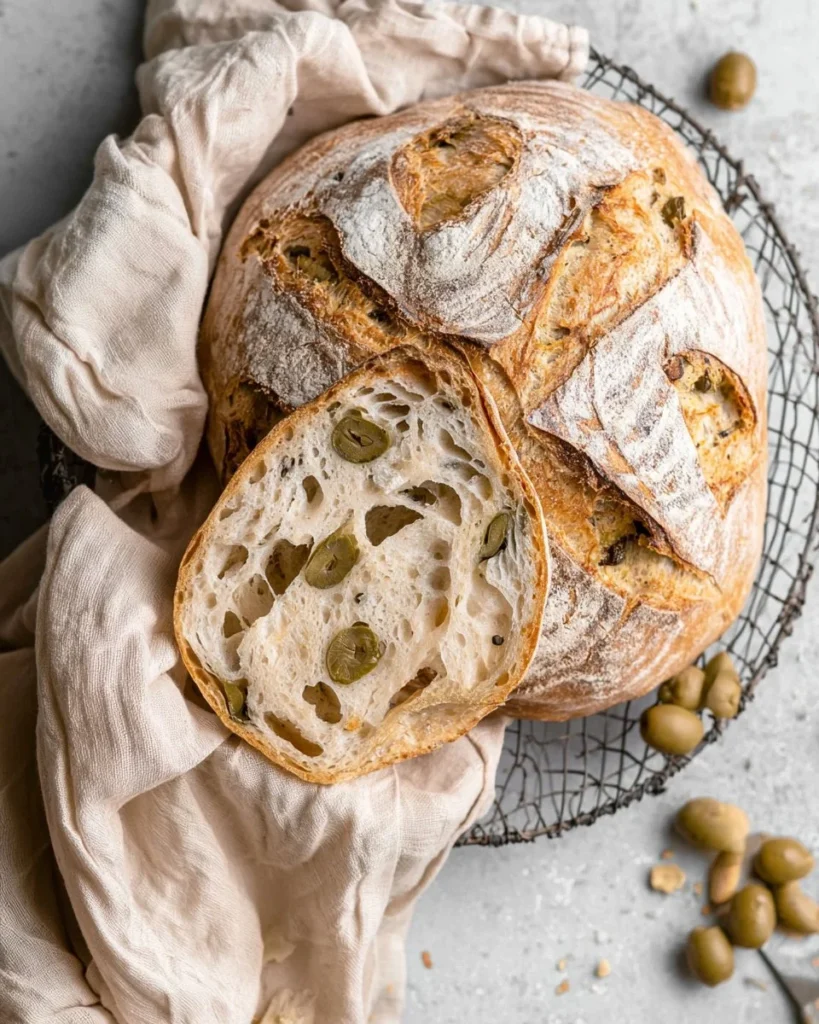
No-Knead Olive Bread
Ingredients
Method
- STEP 1. In a very large bowl, whisk the flour, yeast, and sea salt together until thoroughly combined.
- STEP 2. Make a well in the center of the dry ingredients and add the warm water, maple syrup, and oil.
- STEP 3. Stir the warm water into the dry mixture until it forms a shaggy dough.
- STEP 4. Add the cut olives into the dough and stir to blend them evenly throughout.
- STEP 5. Lightly grease the sides of the bowl, then turn the dough over in it to coat.
- STEP 6. Cover with greased plastic wrap or a light kitchen towel and let it rise on your counter for 2 to 3 hours.
- STEP 8. In the last 30-40 minutes of rising, place your Dutch oven in the oven and preheat to 450°F/230°C.
- STEP 9. After about 2 hours, sprinkle at least a tablespoon of flour on a surface and pour the risen dough onto it.
- STEP 10. Sprinkle flour on top and fold the dough on itself several times until it feels tighter.
- STEP 11. Shape the dough into a circle on a piece of parchment paper.
- STEP 12. Carefully remove the hot Dutch oven, place the dough (on the parchment) inside, and cover with the lid.
- STEP 13. Bake for 45 minutes with the lid on.
- STEP 14. Remove the lid and bake for an additional 15 to 20 minutes until the crust is golden brown.
- STEP 15. Carefully lift the loaf using the parchment and transfer it to a wire cooling rack.
- STEP 16. Turn the bread over and tap the bottom; it should sound hollow to indicate doneness.
- STEP 17. Allow the bread to cool completely before slicing.